For most of its history, video surveillance has answered one question: what happened after the fact. A camera recorded, someone reviewed the footage later, and that was the system working as intended.
That model is reaching its limits.
Indian infrastructure is being built and operated at a pace that outstrips what a human operator watching a wall of monitors can realistically track. Airports are running at record passenger volumes. Smart city command centers are absorbing feeds from thousands of cameras. Manufacturing corridors run continuously. Metro networks keep adding stations and sensors. Power and process plants are carrying more operational risk per square foot than they were five years ago.
The threats inside these environments have also changed shape. An unauthorized entry into a restricted zone, an unattended object near a platform, a thermal spike in a transformer yard — these aren’t events that unfold over hours. They unfold in seconds, and by the time an operator notices on a screen full of competing feeds, the response is already late.
This is the gap AI-powered video surveillance is built to close. Not by adding more cameras, but by giving the cameras already in place the ability to interpret what they’re seeing and act on it.
What Changes When a Camera Can “Understand” Video
A conventional CCTV camera is a passive witness. It captures a person walking into a restricted industrial zone, and that footage sits on a server until someone goes looking for it.
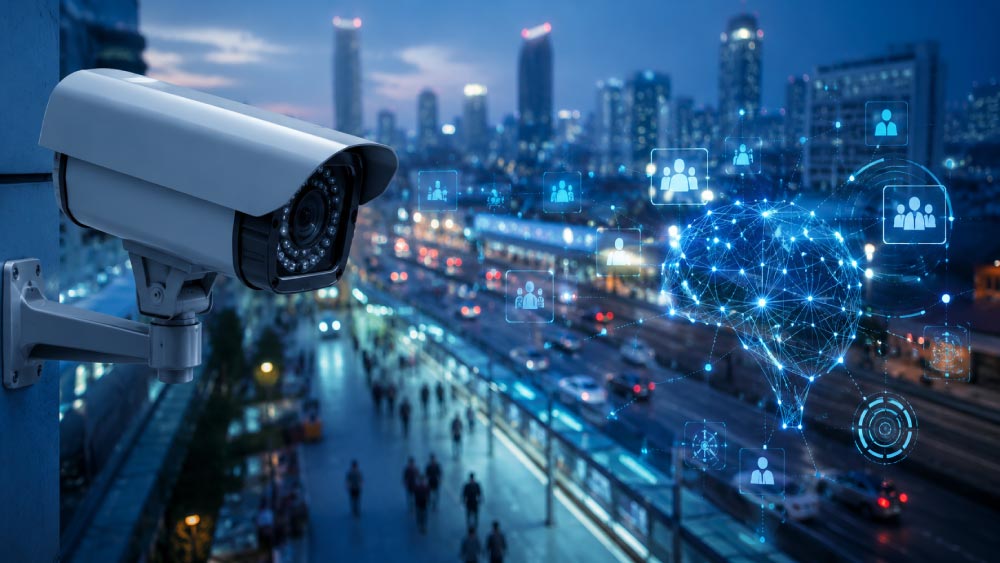
An AI-enabled system does something different in the same scenario: it identifies that a person has entered the zone, checks that entry against access permissions, raises an alert to the command center, and timestamps the incident for later review — all within the time it takes to read this sentence.
That shift, from passive recording to active interpretation, is what separates a surveillance
system from a surveillance infrastructure.
The Building Blocks
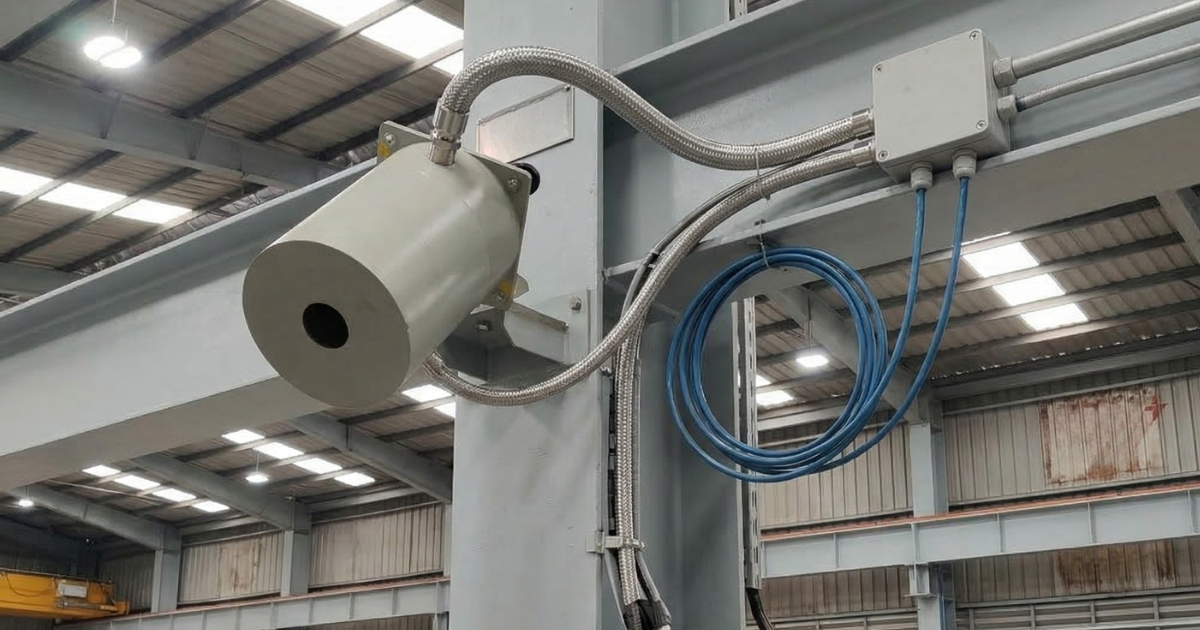
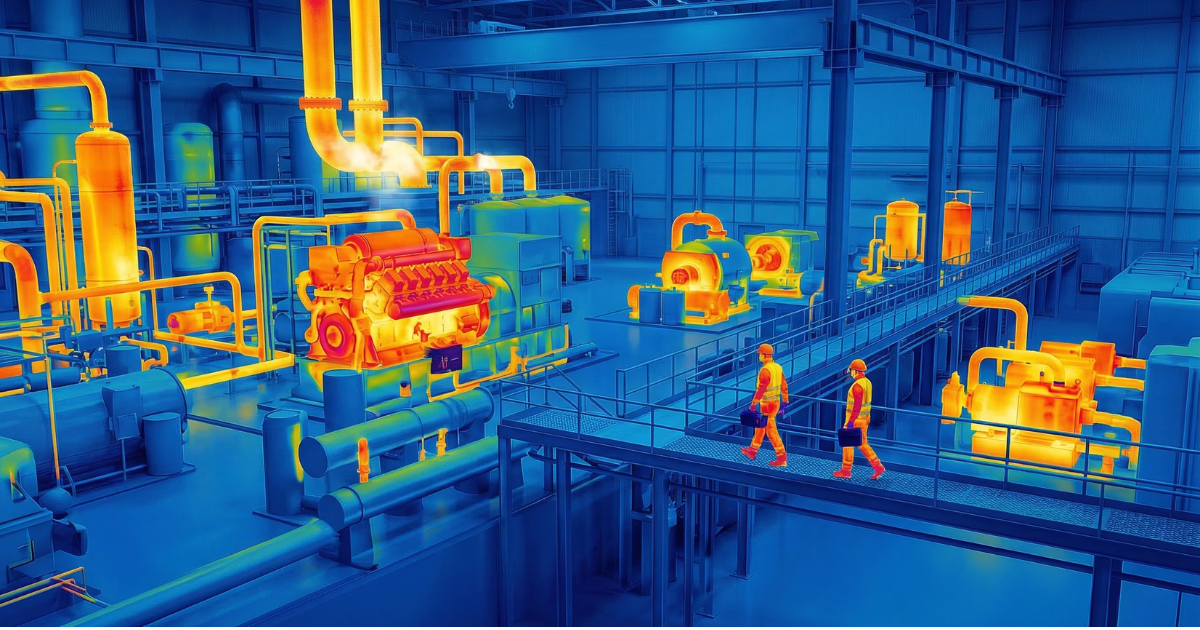
Cameras built for the environment, not just the budget. IP and PTZ cameras cover general-purpose monitoring well, but certain environments need more. On crane-heavy industrial sites and high-heat zones, for instance, visible-light cameras simply can’t see the early signs of thermal escalation — a hot bearing, a stressed cable joint — before they become visible damage. Thermal cameras can. In deployments TEL has executed across crane movement areas and hazardous operational zones, thermal coverage has repeatedly caught what standard cameras were structurally incapable of catching.
Analytics that act as the decision layer. This is the software that turns a video stream into a signal: loitering in a sensitive area, a line crossed in the wrong direction, an object left behind, a worker without required PPE. In a well-designed system, this layer is doing the watching so people don’t have to watch 80 screens for an eight-hour shift.
Edge processing, because latency has consequences. In a refinery or a metro station, the difference between detecting a breach in one second versus seven can be the difference between a contained incident and an escalated one. Processing video locally, at the edge, rather than routing everything to a distant server, is what makes near-instant response possible.
Infrastructure that doesn’t get talked about enough. This is where a lot of surveillance projects quietly fail. Storage that can’t scale, networking that introduces latency, firewalls that weren’t designed with cameras as a threat surface in mind — these problems don’t show up on day one. They show up eighteen months in, when the system that looked good in the proposal starts dropping frames or becomes the easiest way into the network. AI surveillance is, at its core, an IT infrastructure project wearing a camera’s face.
Why More Cameras Isn’t the Answer
There’s a persistent assumption in this industry that more coverage equals more safety. In practice, poorly architected surveillance just produces more noise for a human operator to filter — and human attention doesn’t scale.
An operator watching dozens of live feeds for an extended shift will, predictably, miss things. Not from carelessness, but because sustained visual monitoring degrades attention regardless of how conscientious the person is. Add in motion-triggered false alarms from rain, shadows, and stray animals, and the signal gets buried in noise long before anything useful happens.
The practical cost shows up in a few familiar ways: incidents get caught after the damage is done rather than during escalation, genuine alerts get lost in a flood of false ones, and finding a single relevant clip inside weeks of footage becomes a multi-hour search instead of a five-minute query. AI analytics address each of these directly — not by replacing the operator, but by deciding what’s actually worth their attention.
Where This Is Already Making a Measurable Difference
Perimeter and zone intrusion detection is the most mature use case, and the one with the clearest ROI — flagging unauthorized entry into restricted areas in real time rather than discovering it on review.
Smart parking and traffic flow. In multi-level parking facilities TEL has deployed across Surat, analytics have improved vehicle flow visibility and queue discipline in ways manual oversight couldn’t match at the same density.
Facial recognition for access control, used carefully in airports, metro systems, and secure campuses for blacklist screening and visitor verification — with privacy compliance treated as a design requirement, not an afterthought.
ANPR (automatic number plate recognition), now close to standard in logistics hubs, gated industrial sites, and large smart city deployments.
Behavioral and crowd analytics, which can flag panic movement, unusual crowd surges, or restricted-zone running — relevant anywhere public safety and transportation intersect.
Thermal and gas-linked detection, particularly in power generation and process industries, where the first sign of a failure is often invisible to a standard camera. Hydrogen-cooled generators, transformer yards, and fuel handling areas all carry thermal risk that doesn’t announce itself until it’s already a problem. This is an area TEL has been building deployment models around specifically because the risk profile rewards early, invisible-spectrum detection over after-the-fact footage review.
The Honest Tradeoffs
None of this is without real engineering questions, and a credible vendor should be the one raising them, not glossing over them.
Facial recognition raises legitimate privacy and consent questions that need to be designed for, not bolted on after deployment. AI systems generate far more metadata than traditional CCTV, which means storage architecture has to be planned for that volume from day one, not retrofitted later. And every camera added to a network is now also a potential entry point
— proper segmentation and firewalling aren’t optional extras, they’re part of the core design. Systems that aren’t integrated end up producing fragmented intelligence: more data, not more insight.
What’s Coming Next
The direction is fairly clear: more processing moving to the edge to reduce bandwidth load
and response time; analytics that learn typical behavior patterns at a site well enough to flag genuine anomalies rather than generic motion; cloud-based visibility across multi-site enterprise operations; and, in industrial settings particularly, the early stages of pairing live surveillance data with digital twins of physical infrastructure for more predictive operational modeling.
Why This Comes Down to the Partner, Not the Product
The most common mistake we see enterprises make is treating this as a product purchase
— pick the camera brand, install it, done. The systems that actually hold up over years are the ones designed end-to-end: infrastructure, networking, storage, cybersecurity, analytics, and the unglamorous reality of long-term maintenance and support.
Transit Electronics Ltd has spent over three decades designing and executing surveillance, networking, fire safety, and critical infrastructure systems for industrial clients, smart cities, and large institutional campuses across India. That history includes thermal surveillance in industrial environments, fire detection across metro systems, smart parking deployments, and AI-enabled analytics integrated into broader IT infrastructure — because in our experience, a surveillance system is only as reliable as the infrastructure underneath it.
That’s the layer most vendors skip, and it’s the layer that determines whether a system is still working correctly three years after installation.
In Short
AI-powered video surveillance isn’t really a security upgrade anymore — it’s becoming part of how resilient infrastructure operates day to day. For enterprises, smart cities, airports, and industrial sites, the organizations investing in this now, with the engineering discipline to do it properly, will be the ones with fewer blind spots and faster response when it matters. Want to assess where your current surveillance setup has gaps? Get in touch with the Transit Electronics team for a security infrastructure review.